

Featured in Thresholds of Memory
Namita Paul (b. 1970)
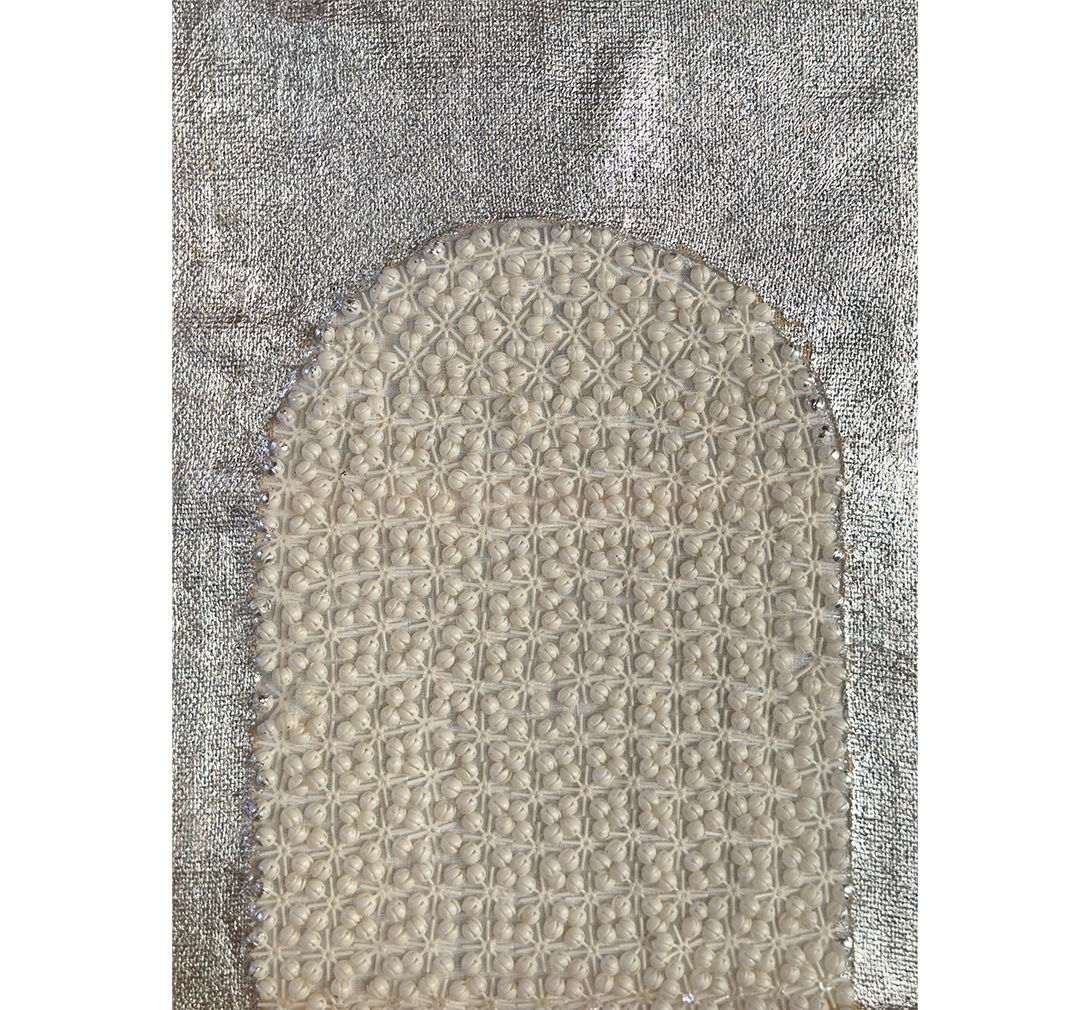
Where Jasmine Bloomed, 2025
Burlap, cotton, plastic jasmine flowers, crystalina, sequins
24 x 18 in.
Courtesy of the artist
About
Where Jasmine Bloomed is drawn from a vivid memory rooted in Namita Paul’s childhood in Mysore, India. She and her family lived on a quiet tree-lined street, in a home with a terrace. They shared a wall with the house next door, and along that dividing line, a jasmine bush grew, leaning gently in between neighbors.
The girl next door was older. She would go up to the terrace to gather jasmine for her mother’s puja (prayer ritual), picking the flowers carefully, methodically. She told Paul stories about her school, her plays, her loves, and the Western music she listened to on cassettes from America. Paul was a tween then, just on the edge of adolescence, and those moments felt expansive and full of promise. That terrace and the bush became a threshold into whole new worlds: friendship, ritual, and storytelling.
Jasmine holds deep cultural meaning in South Asia – used in rituals, braided into hair, marking both joy and mourning. It is a flower of offering, of presence. While its scent lingers, it is also fleeting. That tension – the intimacy of something so soft and the knowledge of its impermanence – has stayed with her.
Where Jasmine Bloomed is a quiet return to that space. It marks the places where memory clings, where scent becomes time, and where the architecture of feeling is built not of brick or beam, but of shared moments that shaped us.