

Featured in The Art & Architecture of Maybe
Viviana Paredes (b. 1954)
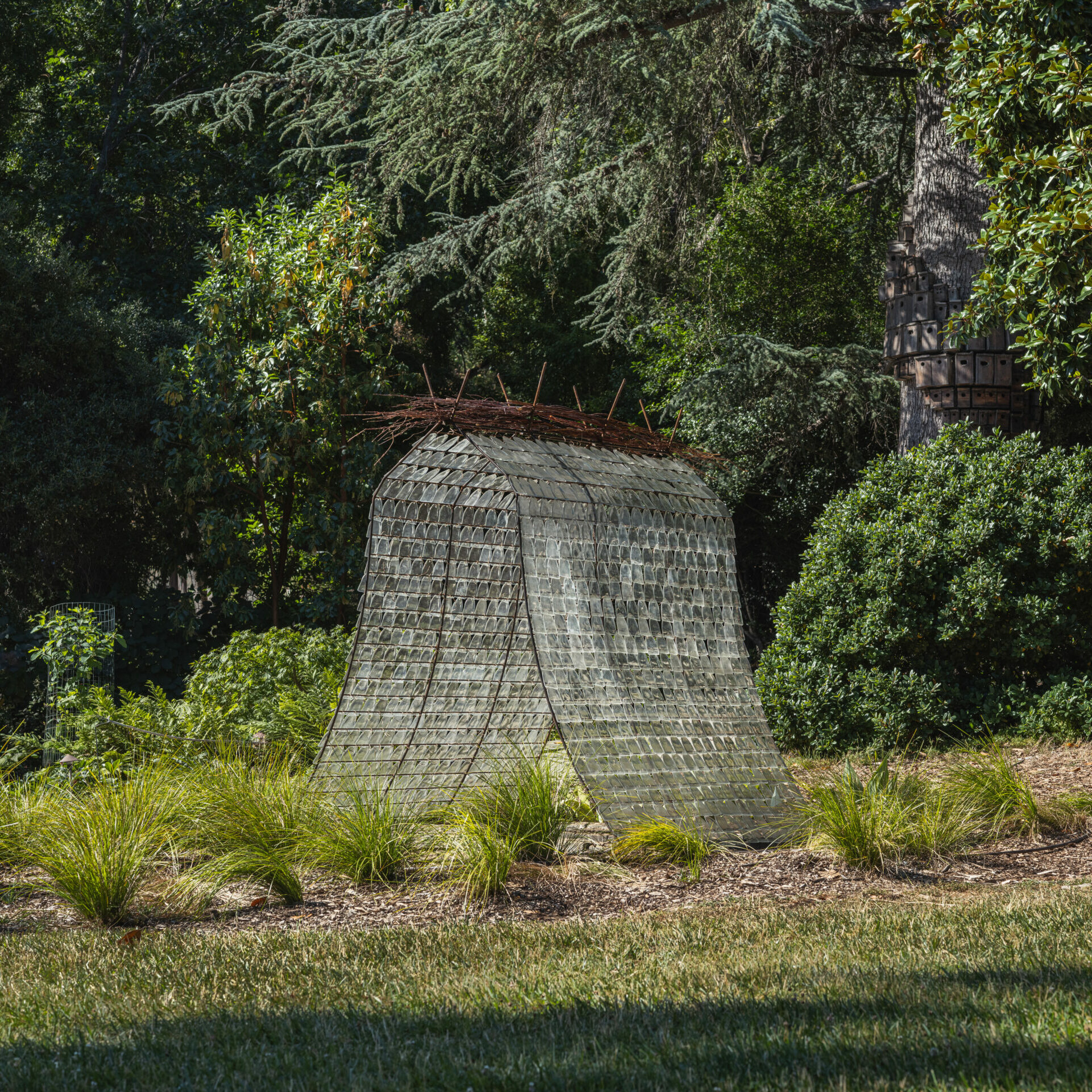
Tequila House, 2018
Recycled deconstructed tequila bottles, wire, steel, and twigs
90 x 73-1/4 x 83-1/4 in.
Courtesy of the artist
Photo by Paul Gallo
About
Tequila House was conceived as part of Viviana Paredes’ ongoing investigation of the maguey (agave) plant and its many medicinal and utilitarian uses by indigenous peoples throughout the Americas, particularly in rural Mexico. Since ancient times, this plant has been used for food, medicine, building material, rope, and ritualistic piercing. Today, many of these ancient practices have been abandoned in the face of increasing commercial demand for tequila and mezcal. The maguey plant contains a substrate that is extracted to make liquors.
Made of 989 recycled Patrón tequila bottles, Tequila House exists squarely at the intersection of cultural and environmental issues, and how they affect indigenous populations throughout the world. Using the language of contemporary art, Paredes creates a surprising (but also apt) visual representation of the maguey plant’s role in providing shelter and building material. Her use of glass is deliberate, offering a pointed commentary on the rise and popularity of American tequila consumption as evidenced by how quickly and easily she was able to collect the empty bottles needed to create this work. She notes with irony that although tequila is the national drink of Mexico, an American-owned tequila company chose the name Patrón, a word that translates in Spanish to “boss, owner, or master.”
Images of the maguey plant are central to Chicano culture and art. As a Chicana artist and an advocate for the environment, Paredes incorporates this sacred plant’s essence and its byproducts to tell the stories of the people who utilize it, and also engage viewers in conversations about indigenous cultures.
Location
This work is on display on the upper Front Lawn under the magnolia tree.
Additional Photos
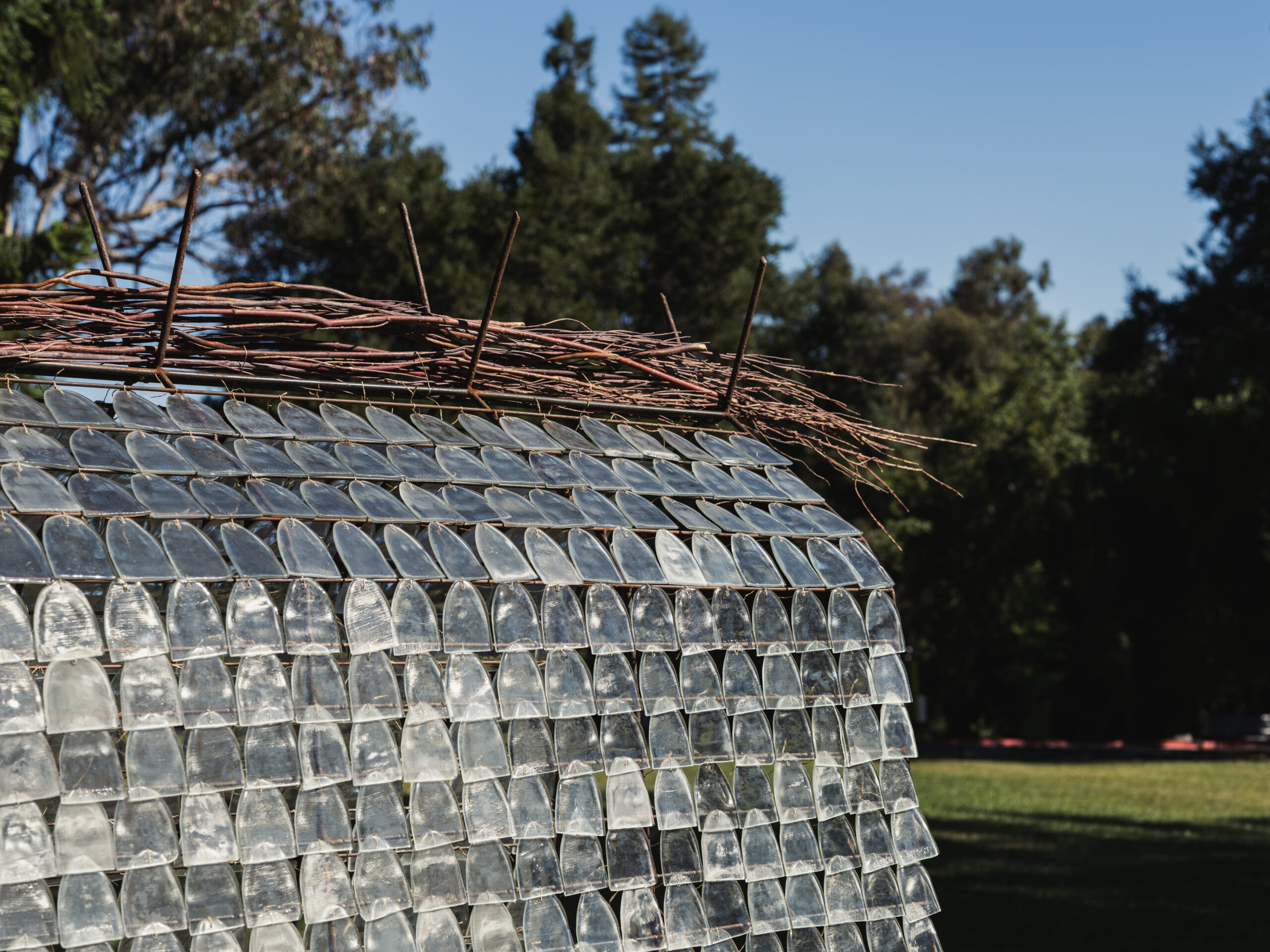
Photo by Paul Gallo